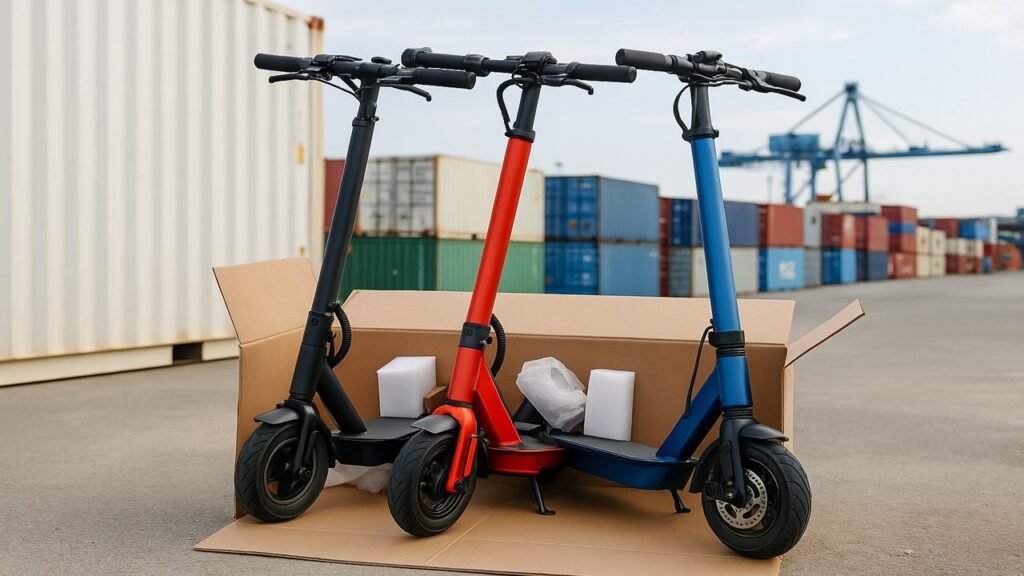
Shipping an electric scooter overseas involves following strict battery regulations, proper packaging standards, and customs procedures to ensure the scooter reaches its destination safely. Whether you’re relocating, reselling, or sending your scooter abroad, understanding each step helps you avoid shipping delays, penalties, or damage during transit.
Key Summary:
- Battery regulations decide eligibility for shipment. Before shipping an electric scooter overseas, always check your battery’s watt-hour rating to determine whether it can travel by air or sea.
- Proper packaging prevents damage and delays. Use a sturdy double-walled box or crate with inner cushioning, and clearly apply all Dangerous Goods (DG) labels. Folding your electric scooter properly before packing helps reduce its overall size, protects delicate components, and makes it much easier to fit securely inside the shipping box.
- Documentation ensures smooth customs clearance. Include a commercial invoice, packing list, and UN 38.3 battery test certificate to meet international regulations.
- Certified carriers guarantee compliance and safety. Choosing DG-certified couriers or freight companies reduces the risk of fines, rejection, or shipment loss.
How to Ship an Electric Scooter Overseas — Step-by-Step Breakdown
To ship an electric scooter internationally, you’ll need to prepare the scooter, comply with lithium battery regulations, pack it securely, and choose a suitable carrier. Following the right process ensures compliance, safety, and cost efficiency.
Here’s a quick overview of the process:
- Verify your scooter’s battery watt-hour rating (Wh)
- Select the most practical shipping method (air, sea, or courier)
- Disassemble and protect fragile components
- Handle and pack the battery safely
- Use DG-compliant packaging and labeling
- Prepare shipping documentation and declare battery details
- Get courier quotes, insurance, and tracking
- Clear customs and import duties
Let’s break down each step in detail.
Verify the Battery’s Watt-Hour Rating
Your scooter’s lithium-ion battery determines how it can be shipped. The watt-hour (Wh) value is found on the battery label or by multiplying voltage (V) by amp-hours (Ah).
- Under 100 Wh: Can be shipped easily as consumer electronics.
- 100–300 Wh: Needs Dangerous Goods (DG) paperwork and proper labeling.
- Over 300 Wh: Must be shipped through a certified DG carrier or via sea freight.
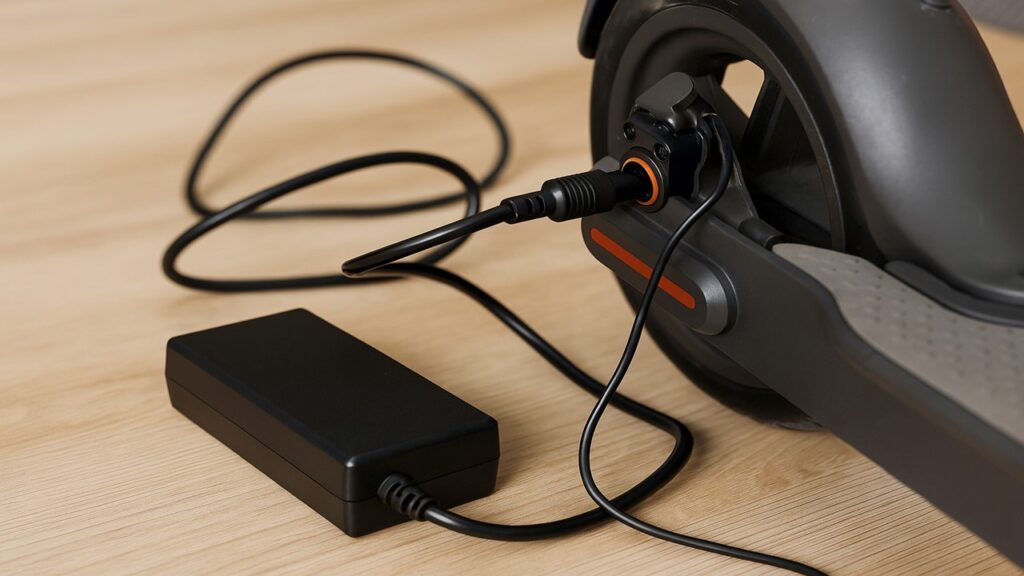
Always keep a copy of the manufacturer’s UN 38.3 safety certification, which confirms that the battery has passed international safety testing. This document is mandatory for most carriers and is just as essential as knowing how to charge your electric scooter safely before preparing it for shipment.
Choose the Right Shipping Method
Different shipping methods have unique rules, timelines, and costs when transporting electric scooters with lithium-ion batteries. Your choice depends on the scooter’s battery size, destination, and urgency.
| Method | Best For | Transit Time | Battery Limit | Estimated Cost (USD) |
| Air Freight | Personal or urgent shipments | 3–10 days | ≤ 300 Wh | $400–$700 |
| Sea Freight | Bulk orders, large scooters | 4–8 weeks | Any (DG labeled) | $250–$400 |
| Courier (FedEx/UPS) | Small scooters or parts | 5–14 days | ≤ 100 Wh | $500–$800 |
Air freight is ideal when you need faster delivery but comes with higher DG surcharges and documentation requirements. Sea freight, while slower, is the most economical for heavy or bulk shipments. Couriers like FedEx or UPS are convenient for smaller scooters under 30 kilograms, offering doorstep delivery with tracking and insurance options.
Prepare and Disassemble the Scooter
Clean your scooter thoroughly to prevent dirt-related customs issues. Remove handlebars, mirrors, and fragile components to reduce damage risk.
- Bag and label small screws and bolts.
- Protect the LCD display, throttle, and brake levers with bubble wrap.
- Photograph the scooter before packing for insurance claims.
This step not only makes packaging easier but also helps maintain the scooter’s structural integrity during shipping.
Handle the Battery Safely
Lithium-ion batteries must be handled as hazardous goods under IATA and UN regulations.
- Discharge the battery to 30–40% charge level before shipping.
- Use insulated materials or anti-static wraps to prevent short circuits.
- Never ship a damaged or swollen battery.
- If carrier rules permit, remove the battery and pack it in a DG-rated container separately.
Failing to meet these safety measures can result in shipment rejection or legal penalties.
Package the Scooter for International Transport
Packaging is critical to protect your scooter from shocks, compression, and vibration during transit.
- Use a double-walled cardboard box or custom wooden crate.
- Add at least 5 cm of padding (foam, air cushions, or bubble wrap) around all sides.
- Secure the scooter with straps or dense foam inserts.
- Place the charger and accessories in a separate padded compartment.
- Seal all openings with heavy-duty tape and reinforce the corners.
Pro Tip: If you have the original packaging, use it—it’s designed to fit the scooter securely and absorb impacts.
Label and Document Correctly
Proper labeling ensures smooth customs clearance and compliance with Dangerous Goods (DG) regulations.
Essential labels and markings:
- “Lithium Battery” label
- UN3481 marking (“Lithium-ion batteries contained in equipment”)
- Orientation arrows (“This Side Up”)
- “Cargo Aircraft Only” label (for batteries over 100 Wh)
Required documents:
- Commercial Invoice
- Packing List
- Hazardous Material Declaration
- UN 38.3 Battery Test Certificate
Incorrect labeling or missing documents can result in customs delays or package rejection.
Calculate Cost and Get Courier Quotes
Shipping costs depend on weight, size, destination, and DG handling fees.
For example:
- 20 kg scooter with 250 Wh battery → $450–$700 by air freight
- Same scooter by sea → $250–$350
Get multiple quotes from DG-certified carriers like FedEx DG, UPS Worldwide Express Freight, or DB Schenker.
You can often save money by shipping the scooter and battery separately when the destination allows.
Buy Insurance and Enable Tracking
Electric scooters are high-value items, so insurance is essential.
- Choose full-value coverage to protect against theft, loss, or damage.
- Use carriers with real-time GPS tracking for shipment transparency.
- Keep digital copies of invoices and insurance receipts for quick claims.
Insurance gives peace of mind and speeds up compensation in case of transit issues.
Clear Customs and Import Regulations
Each country has its own rules for importing lithium batteries and electric vehicles.
- Use the correct HS Code (usually 8711.60 for electric scooters).
- Attach all invoices, certificates, and packing lists.
- Declare the full value to avoid penalties.
- Research import taxes (VAT, duties) for your destination country before booking.
Once cleared, your scooter will be released for delivery to the final address.
Understand Lithium Battery Rules Before You Ship
Lithium-ion batteries are treated as Class 9 Dangerous Goods under international transport laws. Their risk of overheating or short-circuiting makes them subject to strict packaging and declaration rules. Carriers must verify watt-hour ratings, battery condition, and certification before accepting shipments.
Under IATA’s 2025 guidelines, batteries under 100 Wh can usually travel as part of consumer equipment, while anything above requires a Dangerous Goods (DG) declaration and UN 38.3 compliance proof. Always label the package clearly, insulate exposed terminals, and ensure all documentation matches the shipment details.
Compare International Carriers for Electric Scooter Shipping
Choosing the right carrier determines how smoothly your scooter travels overseas. Major providers differ in lithium battery handling capacity, customs support, and transit speed. Always confirm that your chosen company is DG-certified and familiar with electric mobility equipment.
Some couriers restrict certain battery sizes or routes, while freight companies like DB Schenker and DSV can handle larger or bulk shipments.
| Carrier | DG Handling Capability | Battery Limit | Transit Time | Specialization |
| FedEx | Yes | ≤ 300 Wh | 3–10 days | Dangerous Goods certified, strong global network |
| UPS | Yes | ≤ 300 Wh | 5–12 days | Reliable tracking, business-friendly |
| DHL | Partial | ≤ 100 Wh | 7–14 days | Great customs assistance |
| USPS | Limited | ≤ 100 Wh | 10–20 days | Cost-effective domestic option |
| DB Schenker / DSV | Yes | Any Wh | 4–8 weeks | Freight forwarding for large shipments |
If your scooter’s battery exceeds 300 Wh or your destination country has restrictive policies, partnering with a Dangerous Goods logistics specialist ensures full compliance and peace of mind.
Customs, Taxes, and Destination-Country Restrictions
Every country has unique import rules that affect how electric scooters and lithium batteries are processed at customs. Proper documentation and accurate declarations ensure that your shipment clears smoothly without delays or penalties. You’ll need to specify the product category, battery capacity, and declared value when preparing customs paperwork.
Most customs authorities apply taxes and duties based on the scooter’s declared value, shipping cost, and insurance total (CIF value). In the European Union, VAT typically ranges between 19–25%, while in the United States, electric scooters often fall under HS Code 8711.60 and may require an EPA declaration for certain models. Always confirm local battery restrictions — countries like Australia and Japan have strict watt-hour limits for lithium shipments.
Common Mistakes to Avoid
Many scooter shipments get delayed or returned because of simple but costly errors. Paying attention to these details can prevent financial loss and wasted time.
Here are the most common mistakes to watch for:
- Incorrect battery declaration: Undeclared or mislabeled lithium batteries can lead to confiscation or fines. Always include the watt-hour rating and proper UN 3481 marking.
- Improper packaging: Using weak or non-DG-compliant boxes may cause damage or rejection during inspection. Choose reinforced materials with inner cushioning.
- Missing documentation: Failing to attach a commercial invoice, packing list, or UN certificate can halt customs clearance entirely.
- Underestimating customs duties: Declaring a lower product value might seem tempting but can result in penalties and delayed clearance.
- Skipping insurance: Without insurance, damage or loss in transit can become a total loss with no reimbursement.
Double-check every document, label, and declaration before shipping to avoid unnecessary setbacks.
When to Hire a DG-Certified Shipping Company
Hiring a Dangerous Goods (DG)-certified shipping company is often the safest way to transport electric scooters overseas, especially when dealing with larger batteries or bulk orders. These companies are trained to comply with international DG standards, ensuring that your scooter is packed, labeled, and documented according to IATA and UN regulations.
If your scooter’s battery exceeds 300 watt-hours or your shipment includes multiple units, a DG specialist is essential. They manage paperwork like Hazardous Material Declarations, ensure packages meet UN 38.3 testing standards, and coordinate with airlines or freight companies that allow lithium battery cargo. Though this service adds cost, it significantly reduces the risk of shipment rejection or legal violations.
Cost & Time Breakdown — Realistic Expectations
Shipping an electric scooter internationally can vary widely depending on the route, battery type, and carrier. Costs rise with battery watt-hours, distance, and packaging requirements. On average, smaller scooters are cheaper to ship by courier, while heavier units are better suited for sea freight.
Typical cost and time expectations:
- Air Freight: 3–10 days delivery, around $400–$700 for a 20–25 kg scooter with a 250 Wh battery.
- Sea Freight: 4–8 weeks delivery, typically $250–$350, suitable for bulk or high-capacity batteries.
- Courier (FedEx/UPS/DHL): 5–14 days delivery, around $500–$800 depending on destination.
| Method | Transit Time | Battery Limit | Estimated Cost (USD) | Best For |
| Air Freight | 3–10 days | ≤ 300 Wh | $450–$700 | Fast individual shipments |
| Sea Freight | 4–8 weeks | Any (DG labeled) | $250–$350 | Bulk or business shipments |
| Courier | 5–14 days | ≤ 100 Wh | $500–$800 | Light personal scooters |
Shipping without the battery or using a DG consolidator can lower costs significantly. Always get quotes from multiple couriers and confirm what each includes—some offer full insurance and customs support within their rate.
Electric Scooter Shipping Checklist
Before sending your scooter, review all details carefully. A few final checks can make the difference between a smooth delivery and a delayed or rejected shipment.
Quick pre-shipment checklist:
- Battery: Removed or discharged to 30–40%, packed separately if required.
- Packaging: Sturdy double-walled box or crate with inner foam padding.
- Labels: “Lithium Battery,” “UN 3481,” and orientation arrows applied clearly.
- Documentation: Commercial invoice, packing list, and UN test certificate included.
- Insurance: Full-value coverage purchased and tracking activated.
- Customs: Duties and taxes calculated, HS Code and declared value verified.
Completing each step ensures compliance with carrier policies and international safety standards, minimizing the risk of costly returns or fines.
Final Thoughts
Shipping an electric scooter overseas requires more preparation than most people realize, but with the right process, it’s completely manageable. The key is balancing compliance and protection — confirming battery classification, using DG-rated packaging, and declaring everything accurately.
By understanding battery regulations, choosing certified carriers, and investing in proper packaging and insurance, you can ship confidently across borders. Planning ahead not only protects your scooter but also guarantees a stress-free international delivery experience.
FAQs
Can I ship an electric scooter by air with its battery installed?
Yes, but only if the battery is below 300 Wh and the airline permits it. Most carriers require the scooter to be powered off, secured, and labeled as Dangerous Goods.
Do I need to remove the battery before shipping overseas?
If regulations or carrier policies allow, removing the battery reduces restrictions and costs. Always pack it separately in a DG-approved container if shipped alone.
How long does it take to ship an electric scooter internationally?
Depending on the method, air freight takes 3–10 days, while sea freight can take up to 8 weeks. Courier shipments usually fall in between.
What documents do I need for customs clearance?
You’ll need a commercial invoice, packing list, proof of purchase, and a UN 38.3 test certificate for the battery.
How much does insurance cost for shipping an e-scooter?
Insurance usually adds 2–5% of the declared value but provides full coverage for damage or loss during transit.

Max Volt is an electric scooter and e-bike enthusiast who rides daily and knows the nuts and bolts of every model. With years of hands-on repair experience and real-world testing, Max shares practical reviews, maintenance tips, and buyer guides to help riders choose the right gear with confidence. His mission is to make electric commuting safer, smarter, and more enjoyable for everyone.