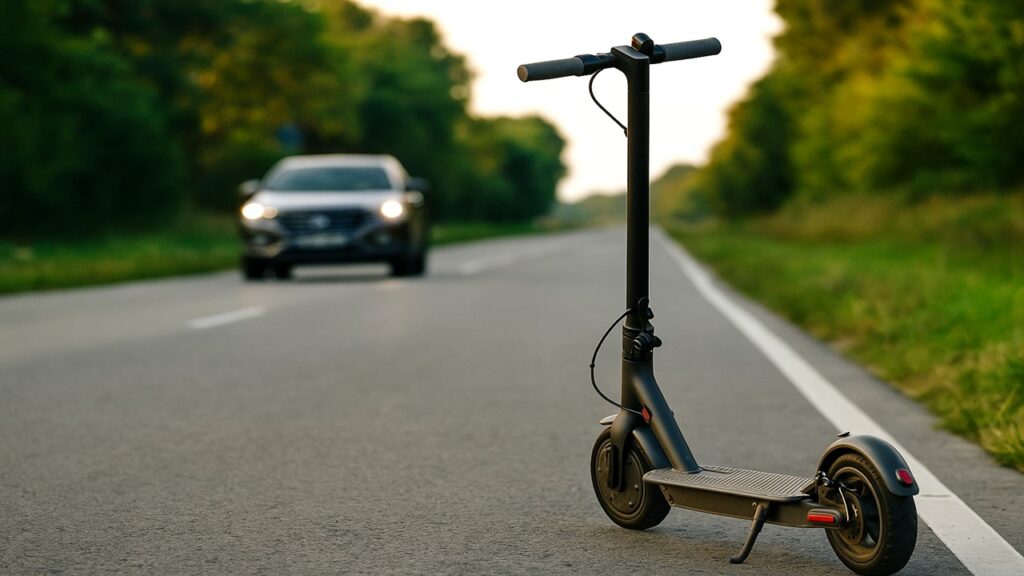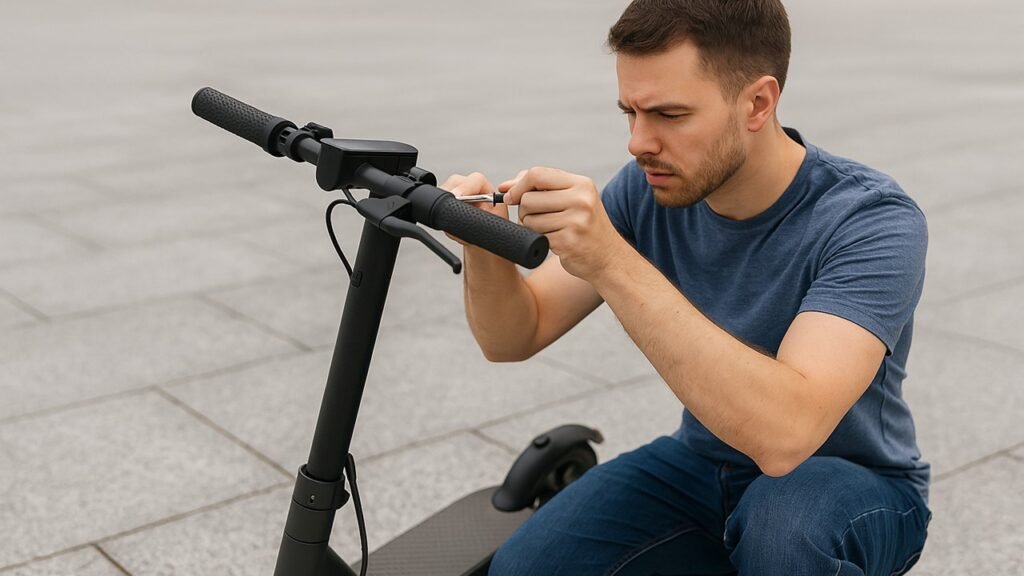
The throttle controls how power flows from your electric scooter’s battery to its motor, directly determining how fast, or smoothly, you accelerate. When it fails, your scooter may lose speed control or stop responding entirely. A well-functioning throttle ensures a safe, predictable, and enjoyable ride every time you hit the road.
Key Summary:
- The throttle controls how power flows from the battery to the motor, directly affecting your electric scooter’s speed, safety, and smoothness.
- Most throttle issues come from loose wiring, corrosion, or damaged sensors that interrupt the signal between the throttle and controller.
- You can test and repair minor throttle problems at home using a multimeter, basic tools, and proper cleaning techniques.
- Regular maintenance—like keeping connectors clean and dry—prevents costly repairs and ensures consistent throttle response over time.
How an Electric Scooter Throttle Works
An electric scooter throttle acts as a signal sender between your hand and the motor. When you press or twist the throttle, it sends a voltage signal through three main wires—power, ground, and signal—to the controller. The controller then tells the motor how much power to draw from the battery based on that signal, allowing you to control your speed with precision.
Most modern throttles use a Hall effect sensor, which detects the magnetic field changes caused by throttle movement. This allows for smoother and more responsive acceleration than older potentiometer-based designs. For example, when you twist the handle or press a thumb throttle, the voltage usually rises from about 1 volt at rest to around 4 volts at full acceleration.
Different scooter models use various throttle types—thumb, twist, or trigger—but all serve the same purpose: converting your manual input into an electrical command. Understanding this mechanism is key because diagnosing throttle issues often comes down to testing whether this signal is being correctly transmitted to the controller.
Common Throttle Problems and Their Symptoms
Throttle issues usually appear as sudden changes in how your scooter responds to acceleration. You might notice lag, jerky movements, or no response at all when pressing the throttle. Some symptoms point to minor wiring issues, while others can indicate deeper electrical faults in the controller or throttle sensor.
| Symptom | Likely Cause | Severity |
| No acceleration or response | Disconnected wire or faulty throttle | High |
| Throttle works intermittently | Loose connector or corroded pins | Medium |
| Jerky or uneven acceleration | Dirt or moisture inside the throttle | Medium |
| Scooter accelerates on its own | Shorted throttle or faulty controller | Critical |
| Throttle sticks or feels stiff | Mechanical obstruction or damaged spring | Low |
How to Fix Throttle on Electric Scooter
If your scooter throttle isn’t responding as it should, the solution is often simpler than it seems. Most throttle problems come from loose connections, dirty sensors, or damaged wiring that can be fixed with basic tools and a few careful checks.
Quick Fix Steps:
- Turn off your scooter and disconnect the battery before inspection.
- Check the throttle cable for loose, bent, or corroded pins.
- Clean connectors using a soft cloth or contact cleaner.
- Test the throttle signal with a multimeter.
- Replace the throttle if voltage readings are abnormal or wiring is burnt.
Once the basic checks are complete, move on to a more structured diagnosis and repair process.
Step 1 — Inspect Battery and Controller Connections
Start by checking that your electric scooter’s battery is fully charged and the controller plug is secure. A weak or disconnected power supply can mimic throttle failure. If your display or lights don’t turn on, the issue may lie in the power circuit rather than the throttle itself.
Step 2 — Examine the Throttle Wiring
Locate the throttle connector—usually a three-wire plug with red, black, and green or blue wires. Disconnect it and inspect for moisture, corrosion, or burnt marks. If the pins look dirty, clean them with electrical contact cleaner and let them dry completely before reconnecting. A secure and clean connection is critical for consistent signal transfer between the throttle and controller.
Step 3 — Test the Throttle Signal with a Multimeter
Set your multimeter to DC voltage. Connect the black probe to the ground wire and the red probe to the signal wire. Power on the scooter and gently twist or press the throttle. The voltage should change smoothly from around 1V at rest to about 4V at full throttle. If the voltage stays constant or jumps erratically, the throttle sensor is defective and must be replaced.
Testing this way helps confirm whether the problem lies in the throttle itself or in another component, such as the controller or fuse.
Step 4 — Check Fuse and Controller for Hidden Issues
If the throttle passes the voltage test but the motor still doesn’t respond, inspect the fuse and controller. A blown fuse will interrupt the signal path even if the throttle works fine. Replace any damaged fuses with the same rated type. If the issue persists, the controller may have a failed transistor or shorted circuit and should be checked by a technician.
Step 5 — Replace the Throttle Assembly if Necessary
When the throttle fails to produce any voltage or shows erratic readings, replacement is the safest option.
- Disconnect the old throttle from the handlebar and unplug its connector.
- Install the new throttle, ensuring the connector type and voltage match your scooter’s system (typically 36V, 48V, or 52V).
- Secure it firmly, reconnect all plugs, and test the scooter before your next ride.
Replacement throttles are affordable—usually between $20 and $50—and take less than 15 minutes to install with basic tools. Once fitted, your scooter should accelerate smoothly again, restoring safe and responsive control.
Replacing a Faulty Throttle (Step-by-Step)
If cleaning or testing hasn’t restored throttle response, it’s time for a replacement. Swapping out a faulty throttle is simple and can often be done with basic tools in under 15 minutes.
Steps to Replace the Throttle:
- Disconnect the battery: Always cut power before touching any electrical component.
- Remove the damaged throttle: Unscrew the handlebar mount and unplug the connector.
- Match the new throttle: Ensure voltage (36V, 48V, etc.) and connector type are compatible.
- Install the new unit: Slide it onto the handlebar and plug in the wires firmly.
- Test your scooter: Power it up and twist the throttle to confirm smooth acceleration.
Each of these steps ensures a safe and accurate replacement. Choosing a quality throttle from a trusted manufacturer helps maintain consistent power delivery and prevents future issues.
When to Seek Professional Electric Scooter Repair
If your throttle issue persists after basic troubleshooting, a professional inspection may be necessary. Some faults go beyond wiring or sensor problems and require diagnostic tools not available at home.
You should contact a repair specialist if:
- The throttle works, but the scooter still doesn’t move.
- The scooter accelerates or moves on its own.
- You find burnt connectors or melted components near the controller.
- You’ve already replaced the throttle, but the issue remains.
Certified technicians can test deeper components like the controller, fuse system, and internal wiring harness using manufacturer-approved methods. Many repair shops also handle waterproofing and wiring upgrades that extend the life of your scooter’s electrical system.
Professional service doesn’t just restore performance—it also ensures your scooter remains safe to ride. Most local or brand-authorized centers offer affordable repairs between $50 and $150, depending on the extent of the damage.
Preventive Maintenance to Avoid Throttle Problems
Preventing throttle failure is far easier than repairing one. A few simple habits can keep your scooter’s throttle responsive and reliable for years.
Routine Maintenance Tips:
- Keep it clean: Wipe off dust and debris from the throttle and connectors regularly.
- Avoid water exposure: Don’t ride in heavy rain or wash your scooter with direct water spray.
- Inspect connectors: Check for corrosion or looseness monthly.
- Protect wiring: Use cable sleeves or heat-shrink tubing to prevent damage.
- Store properly: Keep your scooter indoors or in a dry, shaded area.
Following these steps keeps moisture out, ensures smooth electrical signals, and reduces mechanical wear. A few minutes of care every month can save you from costly repairs and unexpected throttle failure during rides.
Quick Troubleshooting Table
Throttle issues can usually be identified by a few repeatable symptoms. Use this quick guide to determine what’s wrong and whether it’s a DIY fix or something a technician should handle.
| Problem | Likely Cause | Quick Fix | Cost Estimate | Difficulty |
| Throttle not responding | Loose wiring or faulty throttle | Tighten or replace connectors | $0–$30 | Easy |
| Throttle sticking or slow to return | Dirt or debris buildup | Clean and lubricate mechanism | $5–$10 | Easy |
| Jerky or inconsistent speed | Moisture in connector | Dry and seal with dielectric grease | $10 | Medium |
| Scooter moves without input | Shorted throttle or controller | Replace throttle or check controller | $60–$150 | Hard |
| Throttle shows no voltage output | Sensor failure or damaged wiring | Replace throttle assembly | $20–$50 | Easy |
Keeping this chart handy helps you pinpoint problems quickly and act before they worsen.
Final Words
Fixing your electric scooter throttle doesn’t require advanced skills—just patience and the right approach. Start with basic checks like cleaning and testing, move on to replacing faulty parts when needed, and don’t hesitate to call a professional for complex issues. A responsive throttle ensures not just smooth acceleration but also safer rides. Regular maintenance and care will keep your scooter performing like new for miles to come.
FAQs
How do I know if my throttle is bad?
If your scooter doesn’t accelerate, the throttle feels loose, or voltage readings don’t change when you test it, the throttle is likely faulty.
Can I replace an electric scooter throttle myself?
Yes. As long as you disconnect the battery and follow the correct wiring match, most throttles can be replaced at home in under 20 minutes.
Why does my scooter accelerate on its own?
A shorted throttle or malfunctioning controller can send false signals to the motor. Replace the throttle immediately or have a technician inspect the controller.
How long should a scooter throttle last?
Most throttles last 1 to 3 years, depending on riding conditions and exposure to dirt or moisture. Regular cleaning extends lifespan.
Is it safe to ride with a faulty throttle?
No. A damaged throttle can cause sudden acceleration or loss of control. Always repair or replace it before using your scooter again.

Max Volt is an electric scooter and e-bike enthusiast who rides daily and knows the nuts and bolts of every model. With years of hands-on repair experience and real-world testing, Max shares practical reviews, maintenance tips, and buyer guides to help riders choose the right gear with confidence. His mission is to make electric commuting safer, smarter, and more enjoyable for everyone.